
EDITOR’S NOTE: This story has been corrected to clarify that the SeaTac City Council did not approve accepting the WAMASS grant funding. An amendment directing the city manager to seek workable terms with the state passed 3-1, but the final motion failed on a 2-2 vote.
By Alia Sinclair
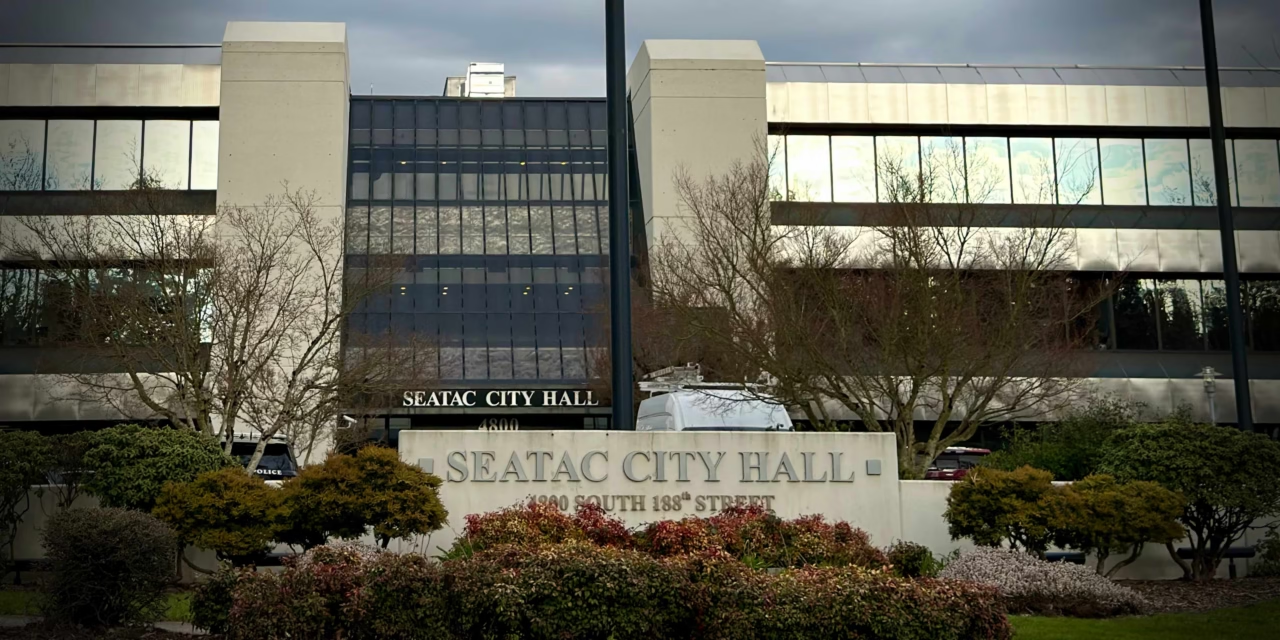
The SeaTac City Council failed to approve $500,000 in state funding Tuesday night, July 28 to continue housing support for asylum-seeking families, after a final vote ended in a 2-2 split.
The item before the council would have continued funding for the Washington Migrant and Asylum Seeker Support program, known as WAMASS, and maintained the staff position that runs the program.
During discussion, city staff said the state had reduced the award while expanding program requirements, and that the city could not meet the new deliverables under the funding terms as written.
The council first approved an amendment, 3-1, to accept the money while directing the city manager to return to the state to seek workable terms. However, the final motion failed on a 2-2 vote.
As a result, the funding was not accepted and the position supporting the program is not funded.
WAMASS began in 2024 as a state-funded pilot program in partnership with the Congolese Integration Network to provide emergency housing, case management and legal aid services to asylum seekers. The original goal was to shelter 65 households for up to 90 days, and all 65 households had been housed as of May 31, 2026.
The state renewed the program for state fiscal year 2027 but reduced funding from $750,000 to $500,000. The expected program impact was reduced from another 65 households to 34 households, while grant-supported staffing was reduced from a full-time human services coordinator to about 31.8 hours per week.
Councilmember Peter Kwon expressed his concern with the reduced state budget and additional scope of the WAMASS program, stating,
“We are looking at a budget short fall. We’re looking at a potential tax increase by implementing a B&O tax now, providing a potential additional burden on our local business owners. [The current state budget for WAMASS] is unsustainable funding. The state [and SeaTac] used one-time relief money to build, what looks like now, a permanent program, without a plan to pay for [it] once the temporary funds ran out. […] In this particular case, the state is actually offloading the state’s own financial burden onto our city and our residents.”
The program scope also changed to require emergency housing and permanent housing, defined as a stable residence for at least six months.

Recent Comments