
By Alia Sinclair
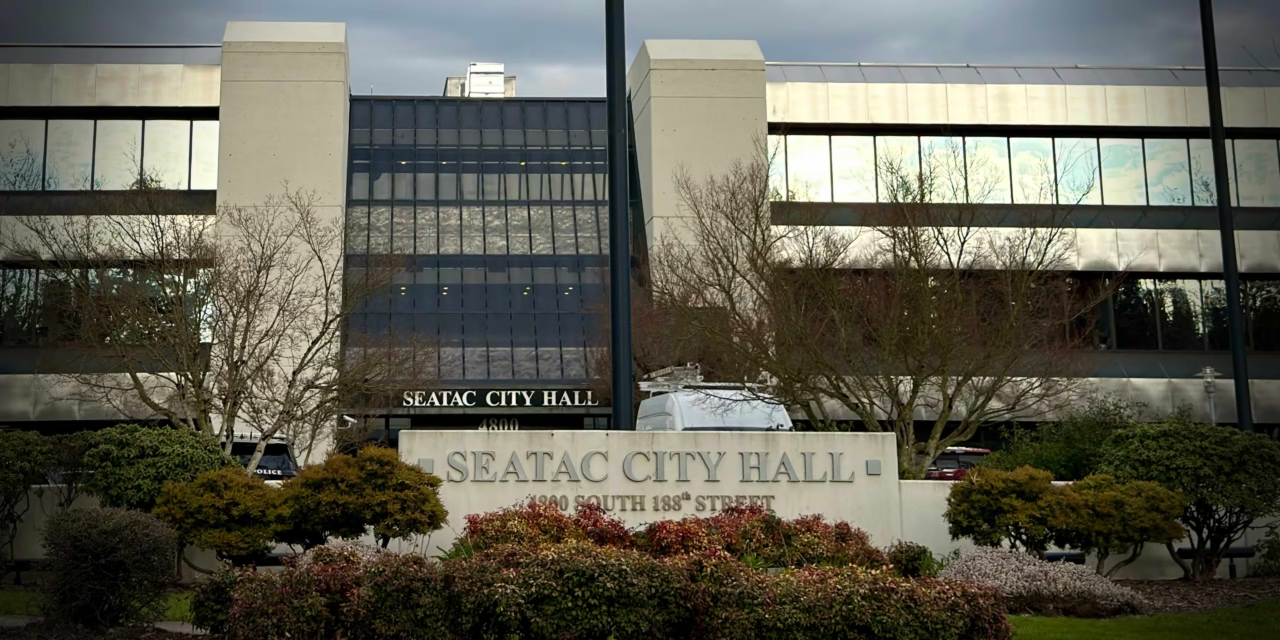
A public hearing was held during Tuesday night’s (June 23, 2026) SeaTac City Council meeting to discuss an ordinance that would extend the moratorium on Immigration and Customs Enforcement (ICE) detention facilities created in SeaTac for an additional six months.
In December 2025, the Department of Homeland Security released a notice indicating that they were seeking a service provider located near Seattle and an airport to create a detention facility to provide detention, transportation, and care for people detained by ICE.
On Feb. 10, 2026, the City Council adopted Ordinance No. 26-1004 establishing a six-month moratorium on the creation or expansion of detention facilities within the city.
This decision was made to align with Envision SeaTac 2044, a Comprehensive Plan adopted by the council in December 2024, that established a vision for the SeaTac community, and goals and policies related to the built environment in SeaTac.
The comprehensive plan that Envision SeaTac 2044 outlines does not support an expansion of the existing federal detention center or the creation of a new detention facility.
In his comments, Councilmember Joe Vinson voiced his opinion that the City of SeaTac is already bearing more than its fair share of the regional infrastructure load, stating:
“SeaTac is a city of roughly ten square miles, and in that footprint, we already host an international airport, a misdemeanor jail, a regional transfer station, three light rail stations, and a federal detention center. Very few cities our size anywhere in the state carry this size of regional load. […] When we’re already absorbing this much regional infrastructure in this small footprint, I think it’s not only reasonable but responsible to extend this moratorium until we have a better understanding of how a potential facility like this could fit.”
A vote was taken to move the moratorium to the consent agenda for the July 14, 2026, city council meeting where it is expected to pass unanimously. If the ordinance does not pass the consent agenda, the current moratorium will expire on Aug. 10, 2026.


Recent Comments